Imagine the delivery of a unique dining table, made to individual order from rare bog oak several centuries old. The crowning achievement of months of work by a master joiner is a captivating satin surface that breathes and responds to light. Along with the furniture, however, the client receives only a standard paper leaflet with care instructions, which after a few weeks is irretrievably lost in the household archive. When, years later, the wood begins to lose its original luster and calls for nourishment, the owner faces a serious dilemma: which preparation exactly was used on its finish?
Using a randomly chosen care product can damage the structure of a noble wood's finish, change its shade or leave marks that are hard to remove. In the case of made-to-order furniture, improper conservation can gradually weaken its aesthetic qualities and lower its value as a piece of craft. A demanding investor who chooses uncompromising quality should not be burdened with remembering the chemical composition of waxes or the detailed care rules for every surface.
The trap of universal preparations
Craftsmen who work with the noblest species – Macassar ebony, rosewood or American walnut – often create their own blends of oils and waxes, matched to a particular grain. The traditional model of after-sales care, based on enclosed business cards and leaflets, turns out in this context to be entirely inadequate. An affluent client expects effortless solutions. Hunting years later for the workshop's contact details to ask what product was used is frustrating and stands in opposition to the philosophy of quiet luxury.
Designers in the ultra-premium segment increasingly recognize that a piece of furniture should not only delight with its form but also look after its own survival. Yet integrating modern technology with classic joinery must not mean disfiguring the form with a cable or a display.
The memory of wood, woken by a phone
The solution that fully respects craft purism is to introduce the contextual physical interfaces of Odoardo Soul™. This technology assumes that intelligence is hidden entirely within the structure of the furniture itself.
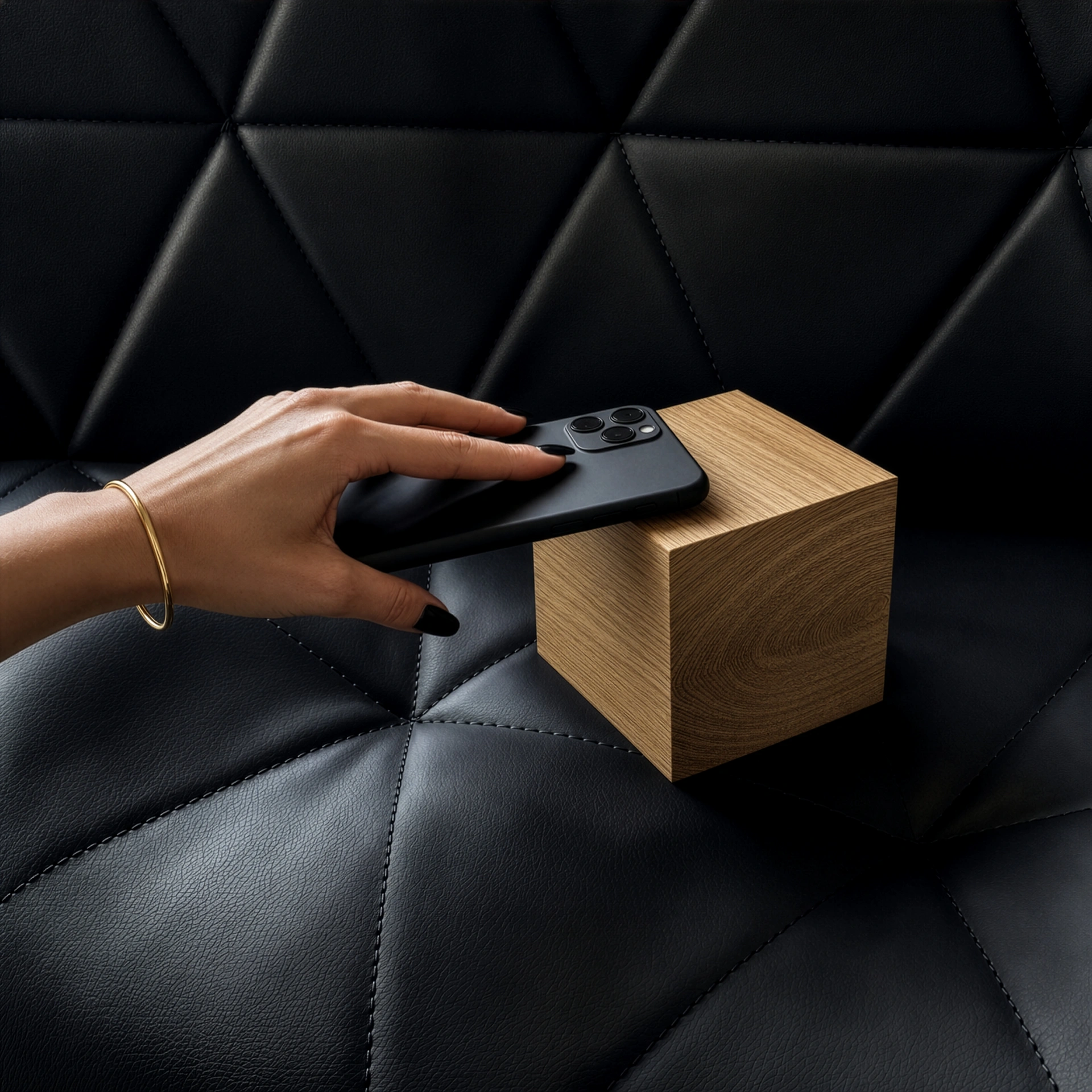
An invisible microchip is fused into the underside of the top or the inside of a drawer during production, becoming a passive part of the object. When, years later, the surface needs refreshing, the owner has no need to leaf through old documents. It is enough to bring a phone close to the edge of the table. That single, discreet touch wakes the memory bound into the matter.
With no application to install and no account to create, the object's digital history opens in the phone's browser. The furniture “speaks” for itself about its origin and the date it was completed, and states precisely which oil-wax blend was used on its finish. Most importantly, it leads straight to the maker's workshop, where the same care product can be ordered – and in a dedicated deployment the order can reach the workshop in a single click. The order reaches the workshop at the moment the client actually needs the product, rather than at a moment chosen by a marketing department.
A holistic space free of noise
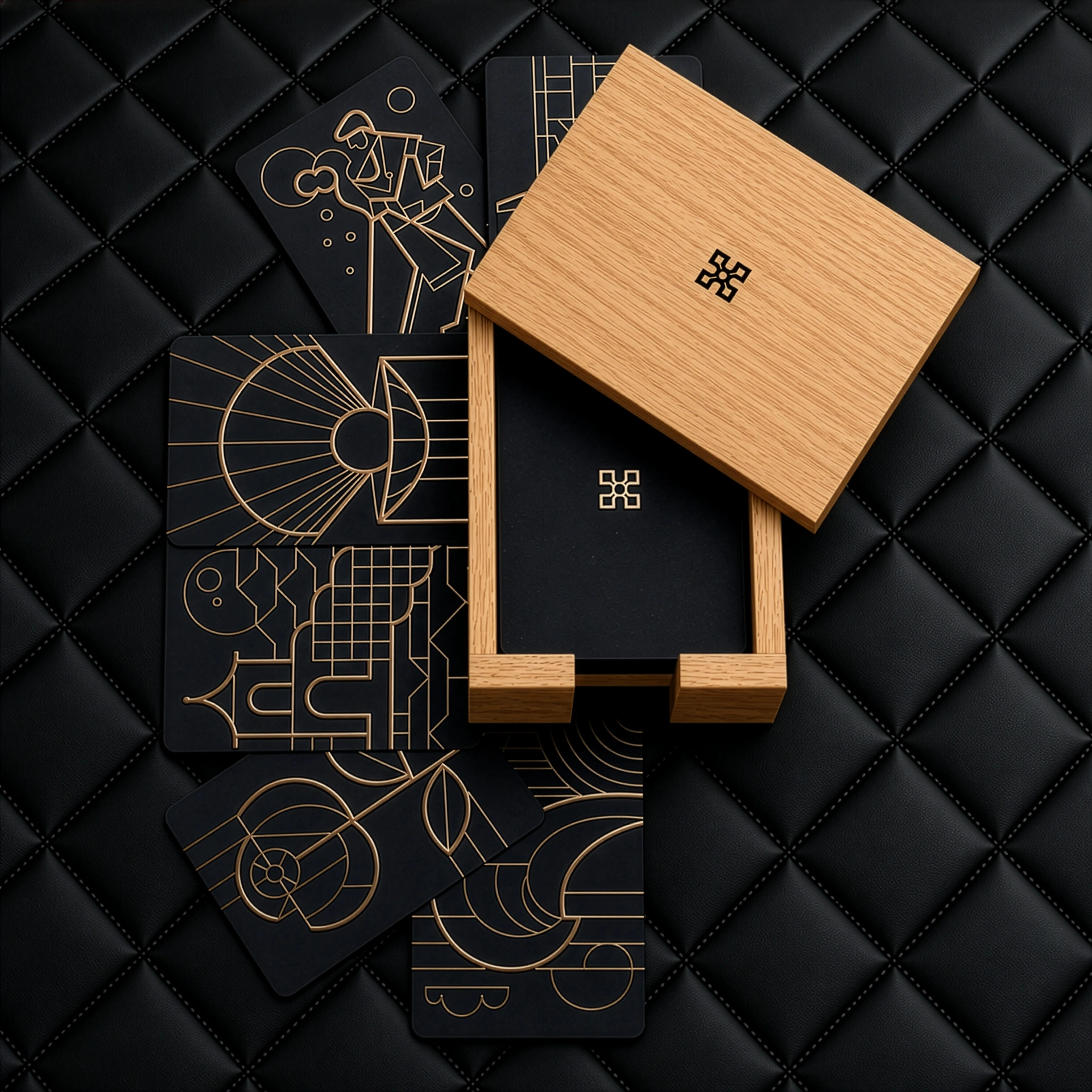
Removing the stress associated with maintaining luxury objects is the basis of building a harmonious interior. When a dining table becomes an intelligent, if silent, partner, it is worth attending to an equally refined setting. The raw beauty of wood corresponds perfectly with rotating art from Odoardo Art™. Periodically exchanged, signed works in oak frames raise the standing of a space without disturbing its calm – why a good frame dispenses with glass is explained in Picture frames without glass. The physical, elegant cards of Odoardo Alibi™, set down on an animated tabletop, meanwhile become a natural invitation to deep conversation among those closest, cutting guests off entirely from notifications from the outside world.
For the joinery workshops that create such masterpieces, defending prestige online matters as much as selecting the raw material. Making a brand's image independent is made easier by renting a prestigious address from the Odoardo Space™ portfolio, shared with nobody and requiring no purchase – the value of such an address is described in Digital real estate for B2B. Finished, perfectly cared-for interiors, in turn, make an ideal backdrop for video memories. Applying the cinematic standard, supported by invisible direction from Odoardo Lens™, allows recordings by residents and their guests to be turned into refined Curated Guest Content (CGC), published with their consent. Precise color grading brings out the velvet depth of oiled wood, which we write about in The role of lighting and color grading.
“A luxury piece of solid wood furniture is an organism that does not degrade – it matures nobly, provided we give it the right conditions. Shifting onto the client the duty of remembering the chemical composition of waxes is a misunderstanding. Technology that eliminates screens and at the same time can solve a real operational problem in one touch is the quintessence of respect for craft and for a buyer's time.”
Giving furniture a digital identity turns after-sales care into something nobody has to remember. When an object carries the knowledge of its own finish, contact with the workshop returns at a natural moment – when the tabletop calls for nourishment. Technology in the premium segment need not remind us of itself; it is enough that it offers a ready solution at the decisive moment.
Why knowledge should wait for the moment it is needed is described in the Odoardo™ manifesto.
 Odoardo Alibi™
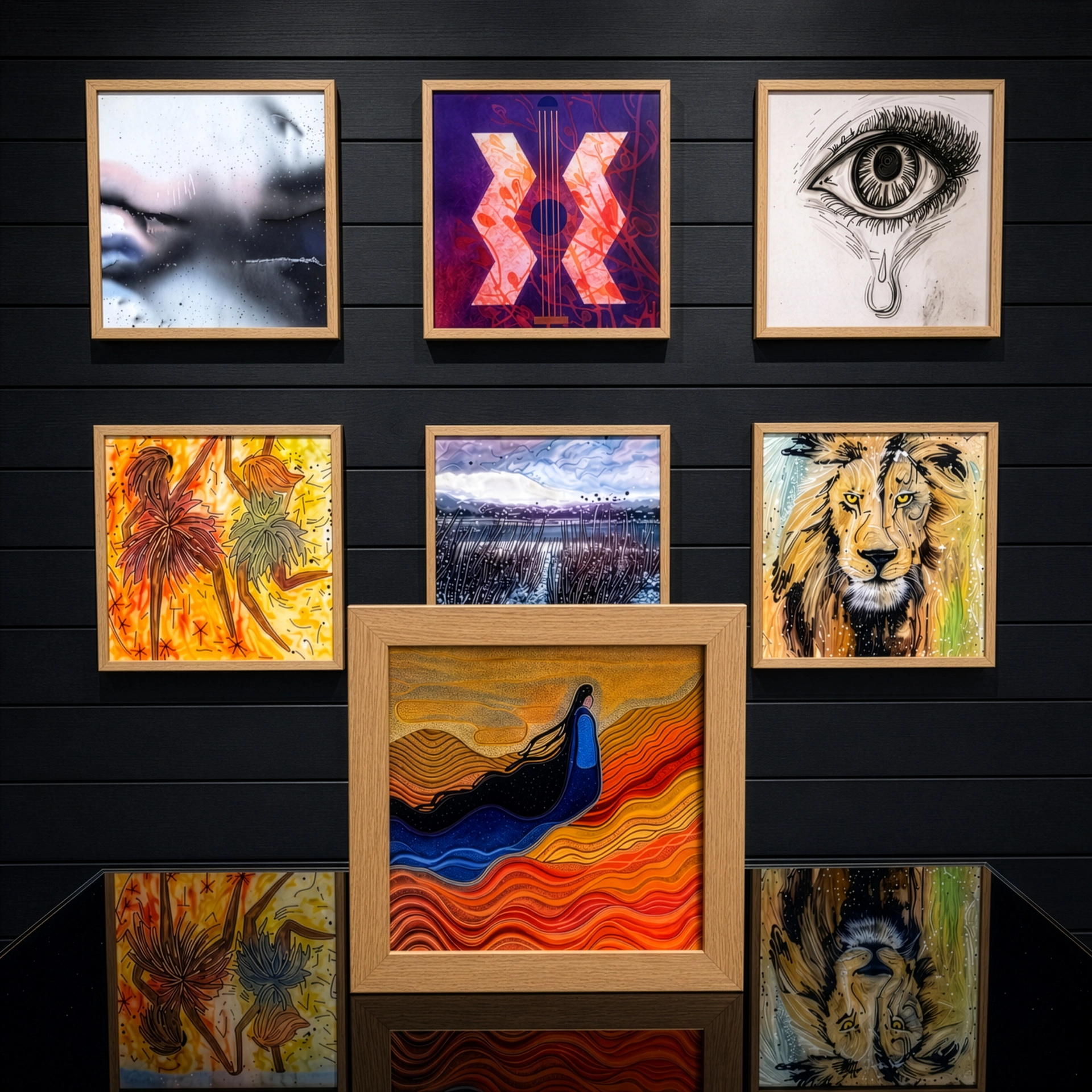 Odoardo Art™
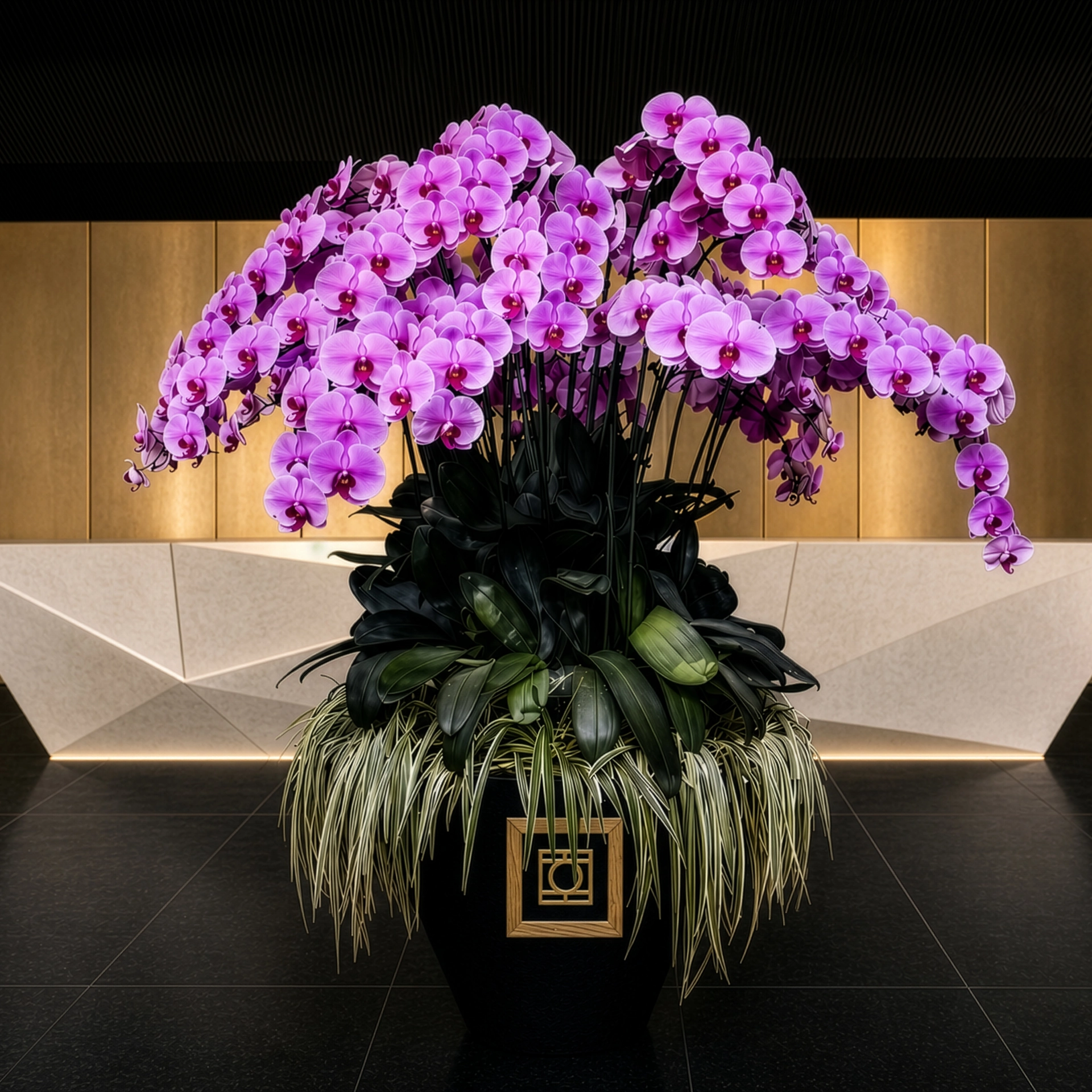 Odoardo Lens™
 Odoardo Space™