Imagine a private opening at a prestigious London gallery. An investor stops in front of a monumental abstract canvas. The composition of colors intrigues and draws him, and he wants to feel a deeper bond with the work before deciding to buy. Unfortunately, the catalog attached to the painting, or the curator's voice, quickly interrupts that moment. Instead of emotion, the connoisseur receives a hermetic discourse on “post-structuralist dichotomy” and “chromatic dissonance in non-Euclidean space”. The collision with cold academic jargon creates instant distance.
One of the barriers that can discourage beginning collectors from investing in contemporary art remains complicated expert terminology and a manner of communication which, instead of bringing a work closer, builds unnecessary distance. An affluent client wants understanding, context and a relationship with the maker, not a sense of intellectual estrangement amid cold definitions.
Gallery purism and the need to understand
Traditional galleries face an enormous challenge. On one hand they must preserve the cleanliness of the exhibition space; on the other, they want to educate the viewer. Unfortunately, the common methods of bringing technology into the world of art – sticking disfiguring QR codes beside paintings or handing guests awkward audio guides – stand in glaring contradiction to the philosophy of quiet luxury.
Abstract art, which works through what is left unsaid, requires a particular informational setting. Too literal a translation strips it of its magic; too hermetic a one creates a gulf between the work and the buyer. To lower the sense of investment risk and build genuine engagement, the message must be empathetic, personalized and above all delivered entirely discreetly.
A frame that speaks the language of emotion
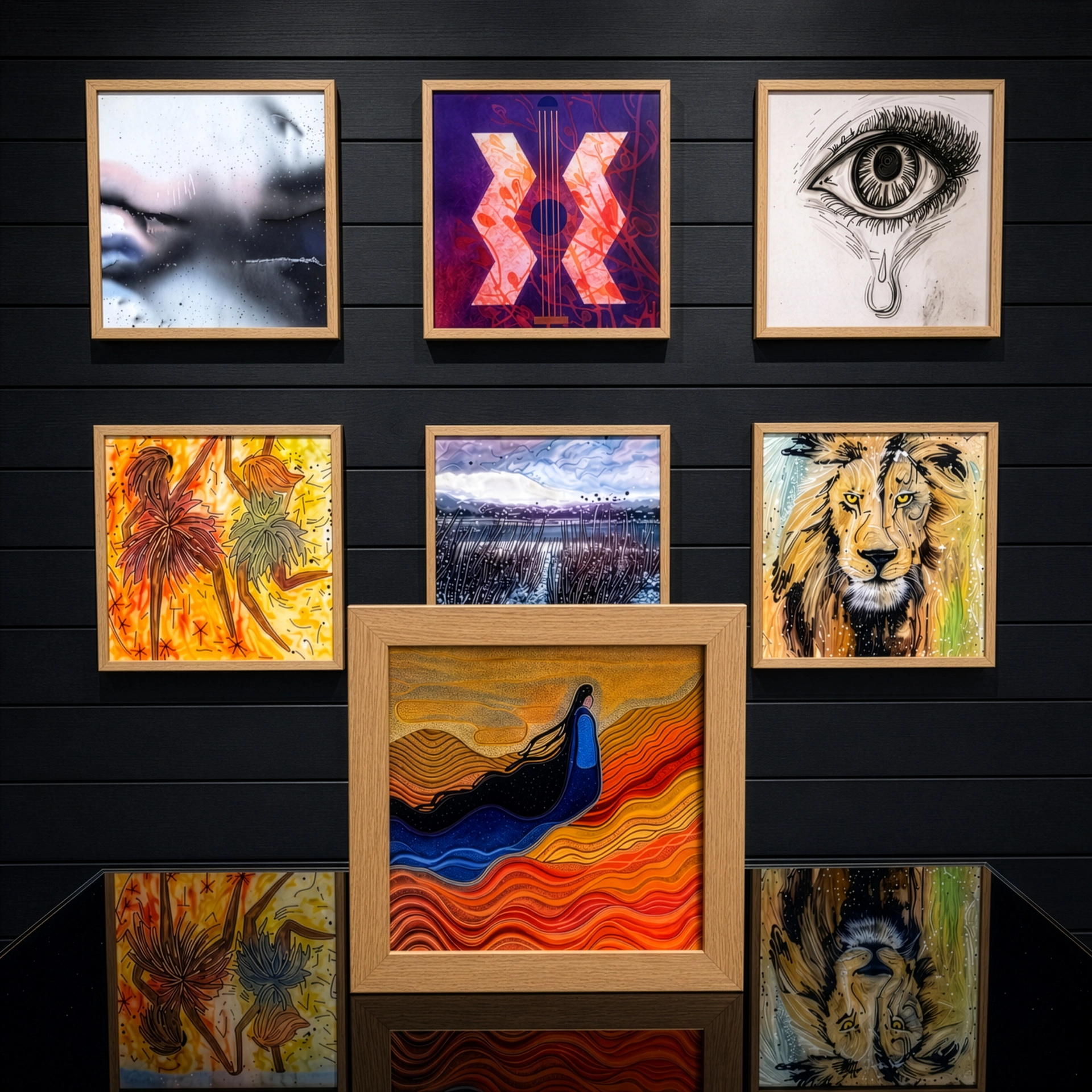
The solution that takes the burden of academic definitions off the viewer and restores art's original, emotional dimension is the contextual physical interfaces of Odoardo Soul™. The concept consists in fusing invisible, advanced technology directly into noble matter – into an oak or gilded picture frame, for instance.
From outside, the work remains flawless, free of screens and cables. When an intrigued collector wants to understand the intricacies of a canvas, however, it is enough to bring his own phone gently close to the edge of the frame. That single fluid touch wakes the sleeping microchip. The system, requiring no application to download and no account to create, takes on the role of a polyglot curator. It bypasses scientific jargon, matching its tone to the user. Instead of handling difficult art-historical concepts, the AI speaks in natural, poetic language about the artist's emotions while laying down layers of paint, explains the symbolism of the colors used and makes a personal experience of abstraction easier. The viewer stops feeling they lack the preparation to have an opinion of their own about a painting.
A holistic space for connoisseurs
Eliminating barriers to understanding is the foundation of modern exhibition practice. When a picture frame can keep quiet or speak competently about a work at the viewer's wish, the whole space recovers its visual dignity. Auction houses and collectors can make full use of this potential by enriching their interiors with rotating displays from Odoardo Art™. Periodically exchanging signed works in oak frames keeps a gallery fresh – the role of a letter from the maker in building understanding is described in A hand-signed letter from the artist.
After an encounter with a moving canvas, guests naturally want to share their reflections. In the lounge areas of exclusive galleries, the cards of Odoardo Alibi™ work well, making conversation about aesthetic impressions easier – we write about this in The meaning of silence and image in communication. And when contact with such refined matter prompts guests to record video, the gallery's image online is worth attending to. The cinematic standard, backed by the hidden direction of Odoardo Lens™, leads through curated shots with appropriate color grading, so that the colors of works keep their authentic depth; publication requires the guest's consent. The context of cultural institutions is developed in The profitability of cultural spaces. To crown that positioning, an institution can base its digital authority on an address from the Odoardo Space™ portfolio, taken exclusively.
Abstract art does not need defending from the viewer; it needs only the right translator. The creator of the Odoardo™ ecosystem defines the phenomenon:
“Abstract art is a language of pure emotion not worth locking in the cage of academic jargon. Trying to translate a canvas with complicated definitions or QR codes creates unnecessary distance. Real innovation lies in hiding advanced artificial intelligence in the wooden frame of a painting. When we let matter speak discreetly, matching its tone to the viewer's sensibility, art recovers its authenticity, and technology becomes an invisible and remarkably empathetic curator.”
Abstraction does not defend itself against the viewer – it defends itself against the way it is spoken about. When a painting speaks about itself in ordinary human language, and only once somebody asks it to, what remains is the most important thing: the right to undisturbed delight.
Why a work should first let itself be looked at and only then explained is set out in the Odoardo™ manifesto.


 Odoardo Alibi™
 Odoardo Art™
 Odoardo Lens™
 Odoardo Space™