Imagine a sunny afternoon on the deck of a hundred-meter superyacht anchored off the coast of Monaco. The owner and his guests are relaxing on the sun deck, surrounded by perfectly laid teak. Into this idyllic atmosphere, however, comes a sudden need to call staff, look at the chart of a planned passage or check safety protocols before an approaching helicopter flight. In the classic model, a guest is forced to reach for a thick leather binder of printed procedures, use an on-board tablet on which the sun makes anything unreadable, or listen to the crackling radio messages of the crew.
In the ultra-premium travel segment, privacy, discretion and fluency of service are among the most important elements of the client experience. A guest chartering a superyacht or taking a private flight expects the crew's communication, the technology and all the logistics of the journey to stay in the background. The highest standard of service does not consist in demonstratively exhibiting the staff's work, but in anticipating needs and meeting them almost imperceptibly.
Visual noise and the perfection of craft
Attempts to digitize procedures in luxury transport often end in aesthetic dissonance. Installing plastic touchscreens next to hand-polished walnut, mahogany or rare leather in a Gulfstream cabin is a step that lowers the standing of the whole interior. Forcing VIP guests to download special mobile applications before boarding, meanwhile, breeds irritation and a sense of being watched.
Technology in private aviation and yachting faces an exceptional challenge: it must be fully ready to work, resistant to harsh conditions (sea salt, damp, pressure changes), and at the same time entirely hidden from the passenger's view until it becomes necessary.
Teak as a digital interface
The answer to such strict requirements is to introduce the contextual physical interfaces of Odoardo Soul™. This uncompromising concept assumes that the microchip and the invisible artificial intelligence are fused directly into the structure of the deck itself or of a table in an aircraft cabin.
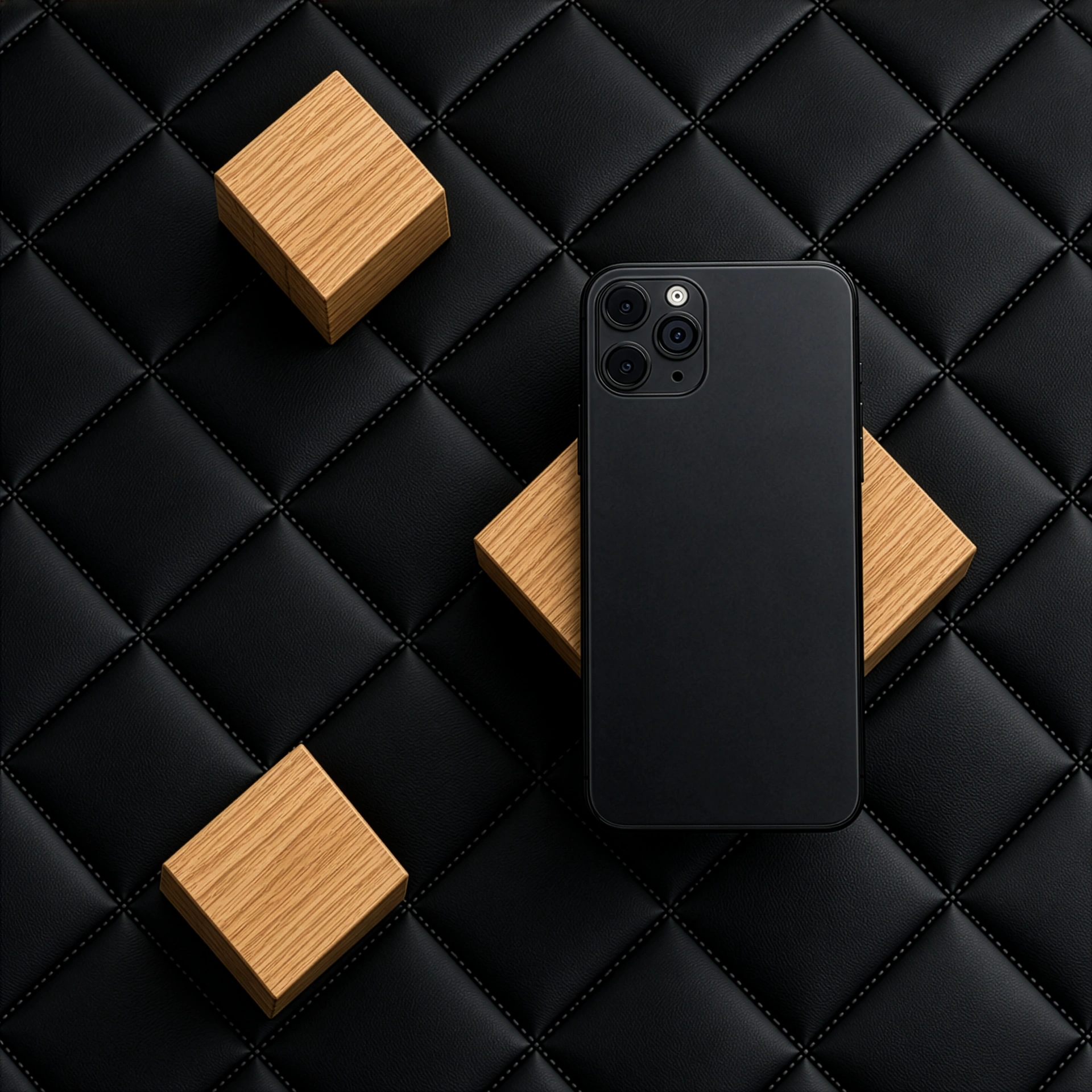
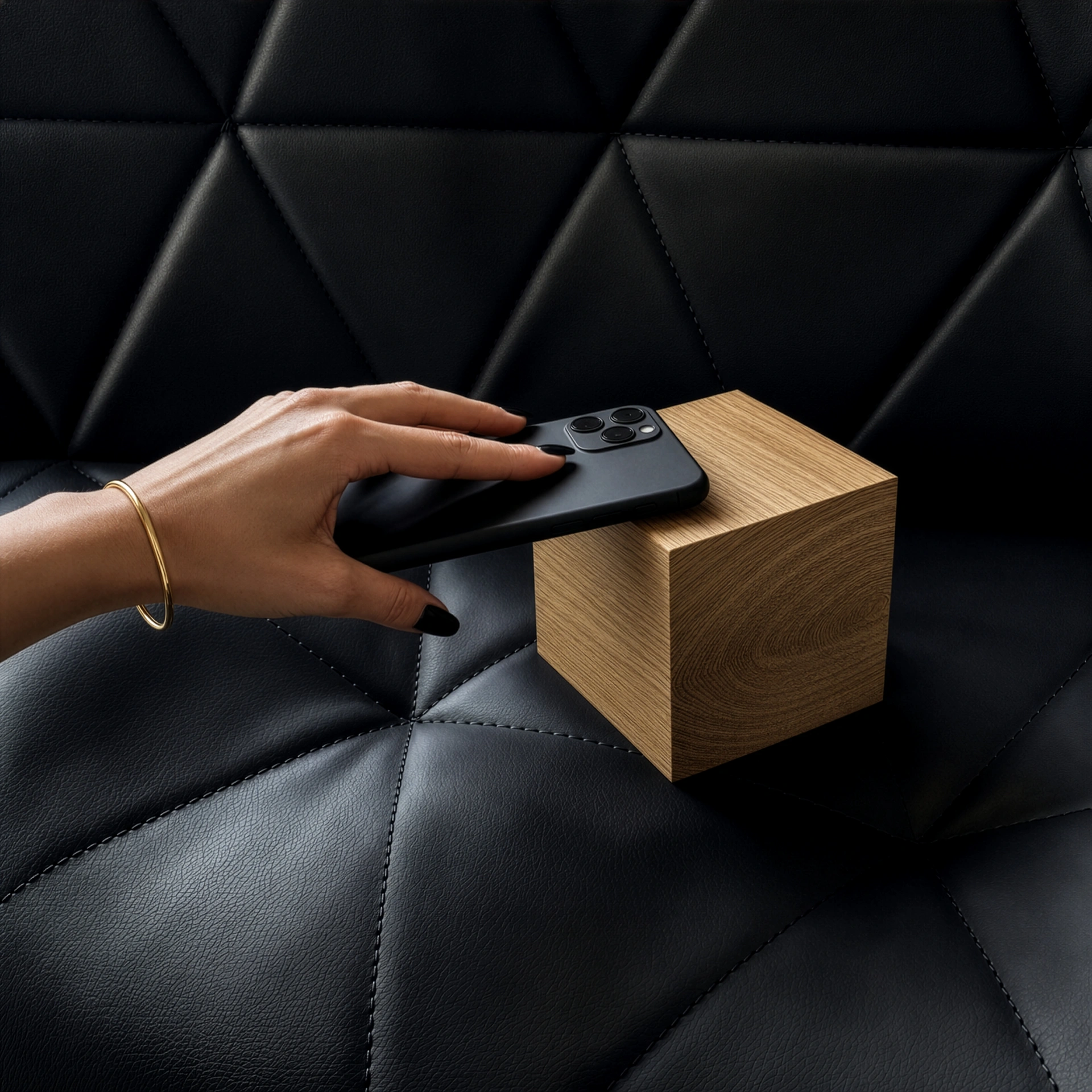
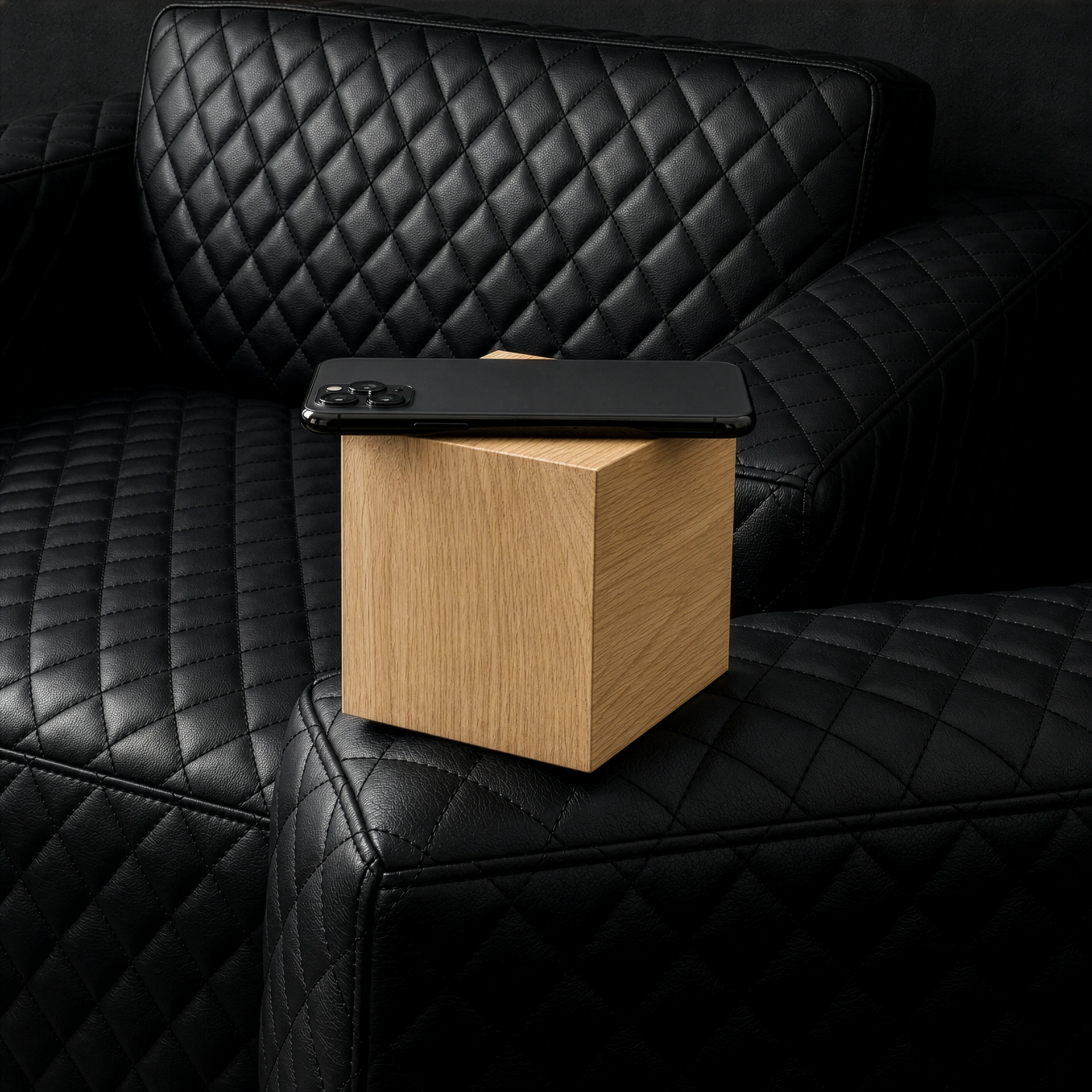
There are no screens, cables or disfiguring stickers here. Externally, the surface remains flawlessly clean wood. The shift of paradigm happens in a fraction of a second. When a passenger wants to order a glass of champagne discreetly, see the map of the planned voyage or read the evacuation instructions in aviation, they simply place their own unlocked phone on a designated, subtle milled recess in the wood. That fluid, soundless touch wakes the animated matter. With no software to install, a dedicated interface appears immediately on the guest's personal phone and responds precisely to the context of the journey.
An ecosystem of absolute quiet
When a silent digital environment takes over explaining procedures and passing requests to the crew, the interior of a yacht or a jet can concentrate fully on creating quiet luxury. The atmosphere of the main saloon is strengthened by the presence of signed works from Odoardo Art™. Framed in solid oak, rotating pictures raise the visual prestige of a space – why such a frame dispenses with glass is explained in Picture frames without glass. When the time comes for evening relaxation on the upper deck, the discreet cards of Odoardo Alibi™ can help in breaking free of the digital world, which we write about in Business travel (incentive travel).
Luxury travel is not only about privacy, however, but also about memories that affluent clients willingly share with those around them. The User-Generated Content (UGC) they publish often suffers from a lack of stabilization and proper exposure. The cinematic standard, managed by the discreet director Odoardo Lens™, allows those recordings to be turned into refined Curated Guest Content (CGC), which nobody publishes without the guest's consent. And so that brokers and charter companies can build a reputation online, an address from the Odoardo Space™ portfolio, used by one entity alone, helps – the value of such an address is described in Building a digital monopoly online.
The relationship between traditional boatbuilding and invisible technology is captured perfectly by the creator of the Odoardo™ ecosystem:
“On the deck of a yacht or in the cabin of a private jet, every millimeter of teak or walnut veneer is a tribute to nature and to engineering of the highest order. The real revolution comes when technology becomes as invisible as the wind in the sails. Animated matter lets the wood speak only once a guest asks it to with their own phone, preserving absolute visual and acoustic purity of the space.”
A leather binder of procedures and a tablet unreadable in the sun are today the only things standing between a guest and the information they happen to need. When teak itself takes on that role, there are fewer things on deck to operate and fewer things to look at – and that is precisely what people put to sea for.
Why technology should keep quiet until it is called is described in the Odoardo™ manifesto.
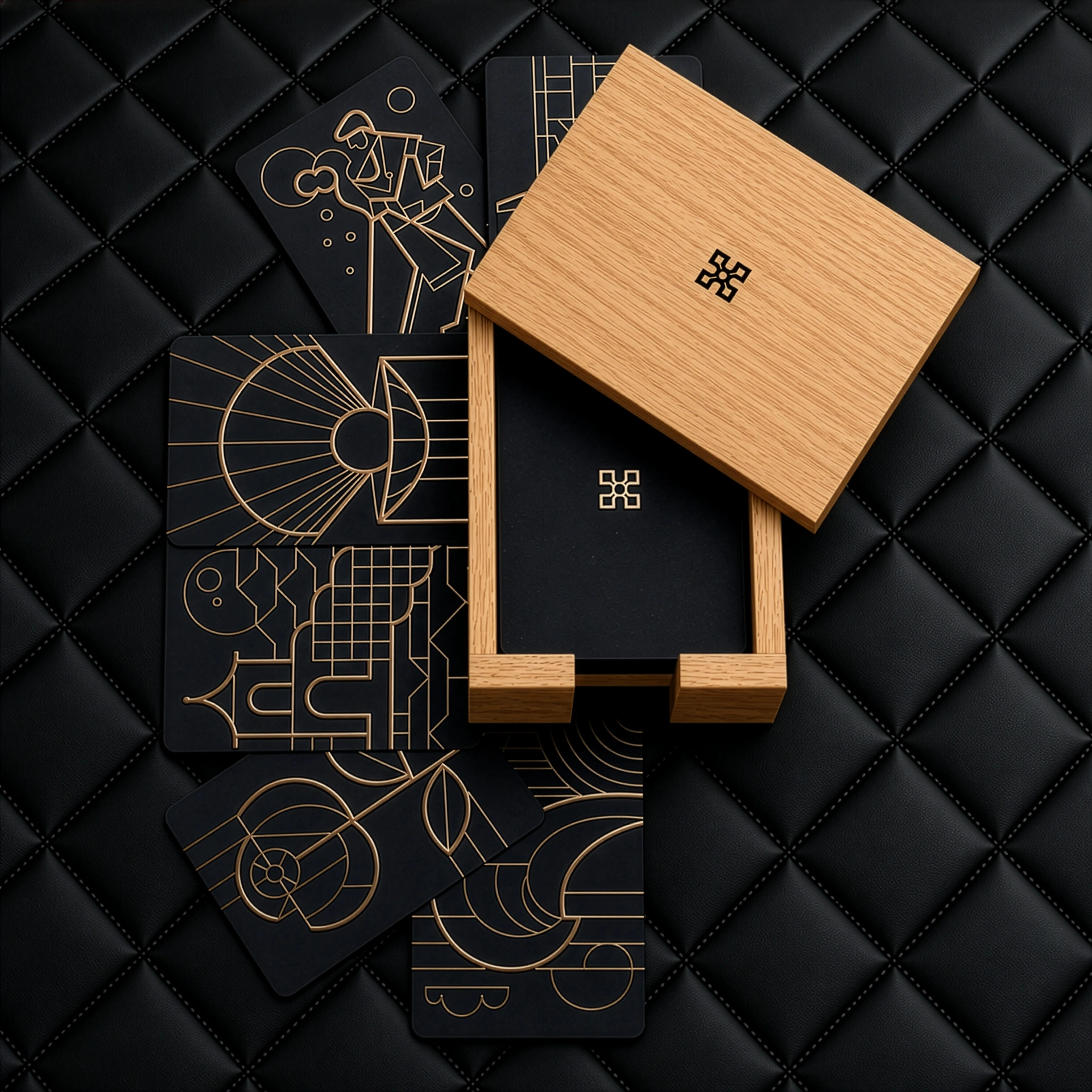 Odoardo Alibi™
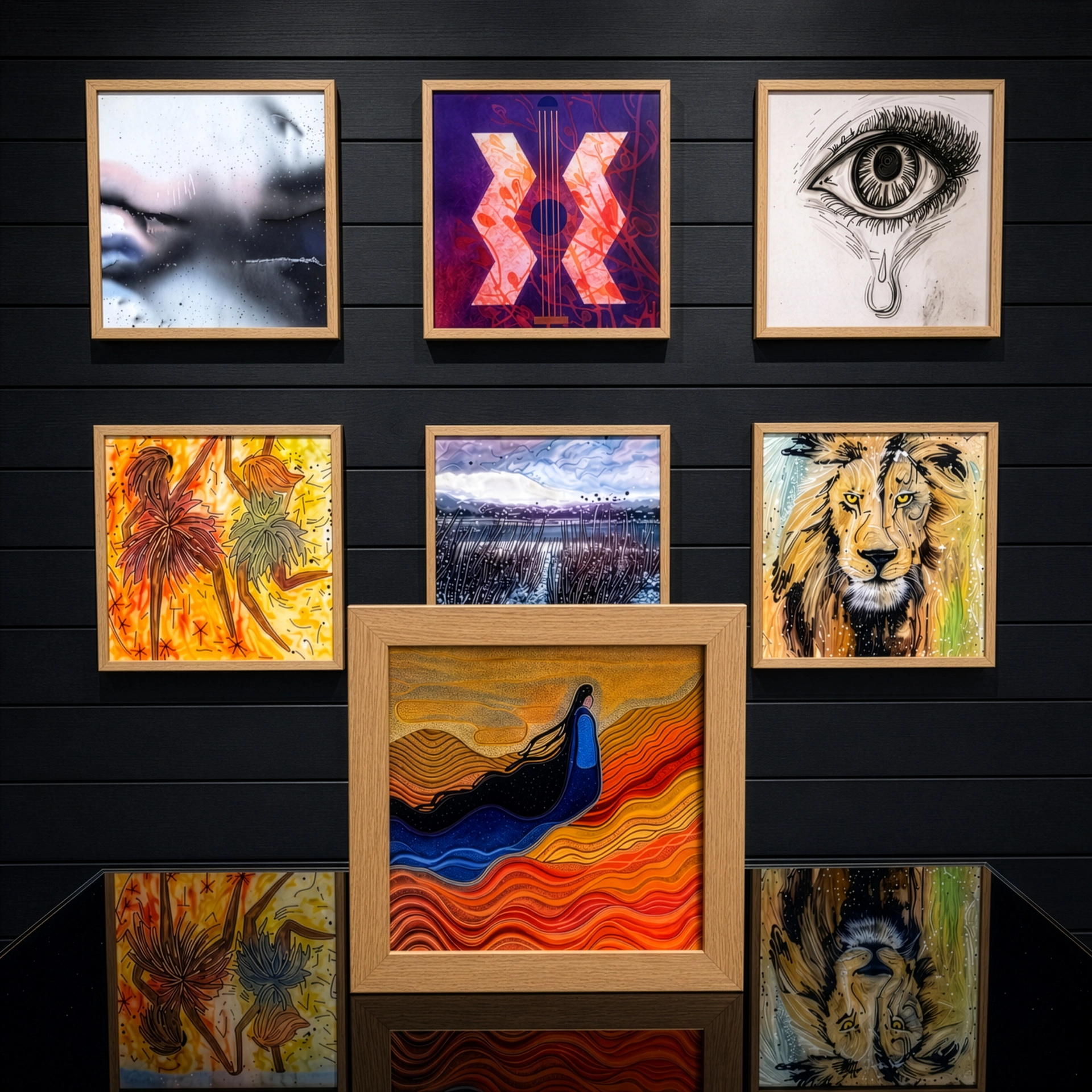 Odoardo Art™
 Odoardo Lens™
 Odoardo Space™