The sense of touch is, in evolutionary terms, our oldest channel of knowing. In today's world, dominated by the cool screens of smartphones, our hands suffer a shortage of structural stimuli. In designing premium goods, superficial aesthetics are not enough. For an object to stay in the memory and confirm its quality, it has to engage touch and react to the light it meets. An example of such a solution is three-dimensional, raised gilding.
Why does touch define value?
Research in sensory marketing shows that information arriving through touch changes the judgment of a product – before we manage to justify that judgment. Holding an object of perceptible mass also increases the sense of “psychological ownership”: a thing one has picked up begins to be treated as one's own.
Disregarding the weight of touch is the “it will work out” trap. Staring at smooth screens, which deepens the phenomenon of continuous partial attention, we cut ourselves off from being here and now. Isolation quickly builds invisible walls in marriage. Bringing back into our homes objects that act on touch is the first step toward recovering closeness.
The alchemy of light and shadow
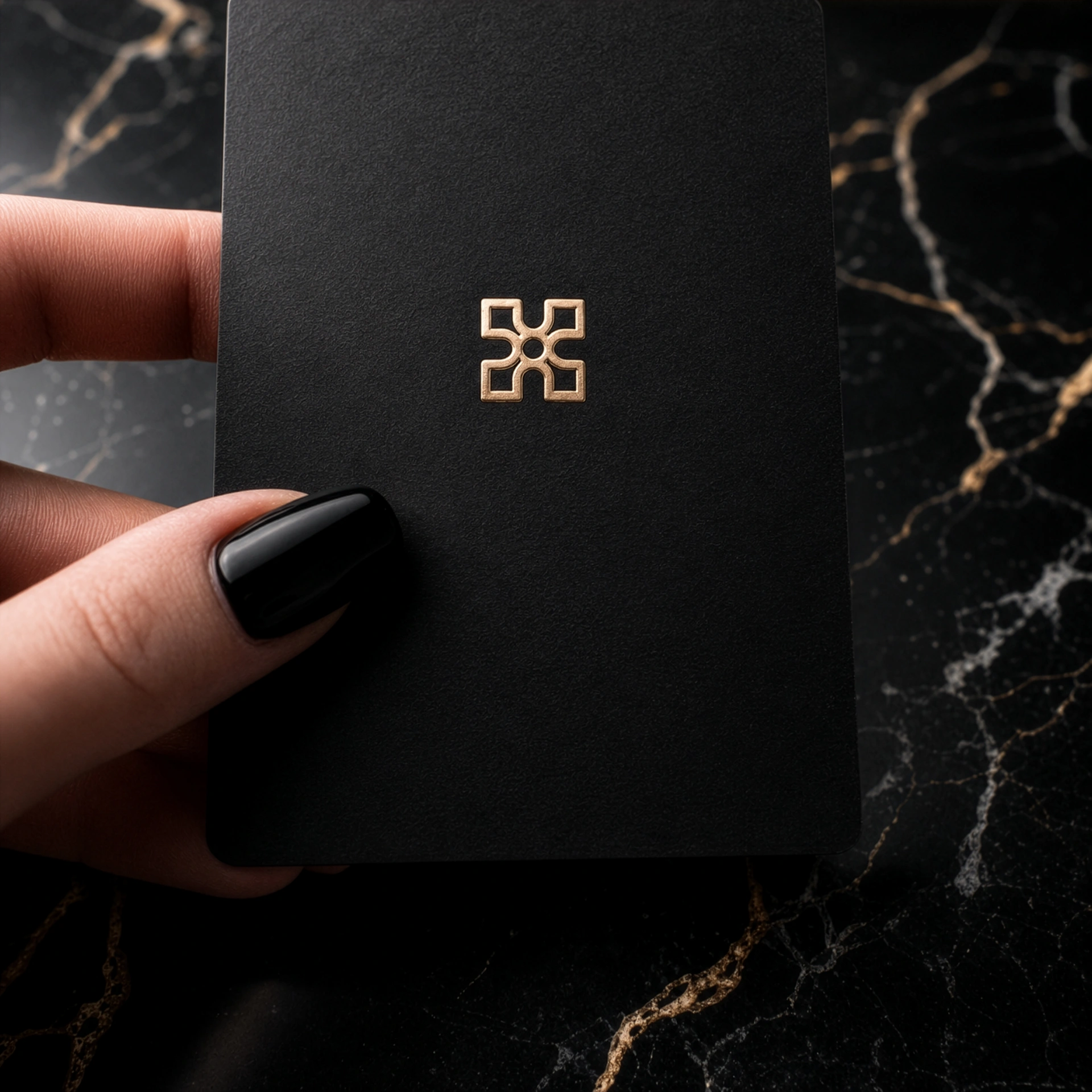
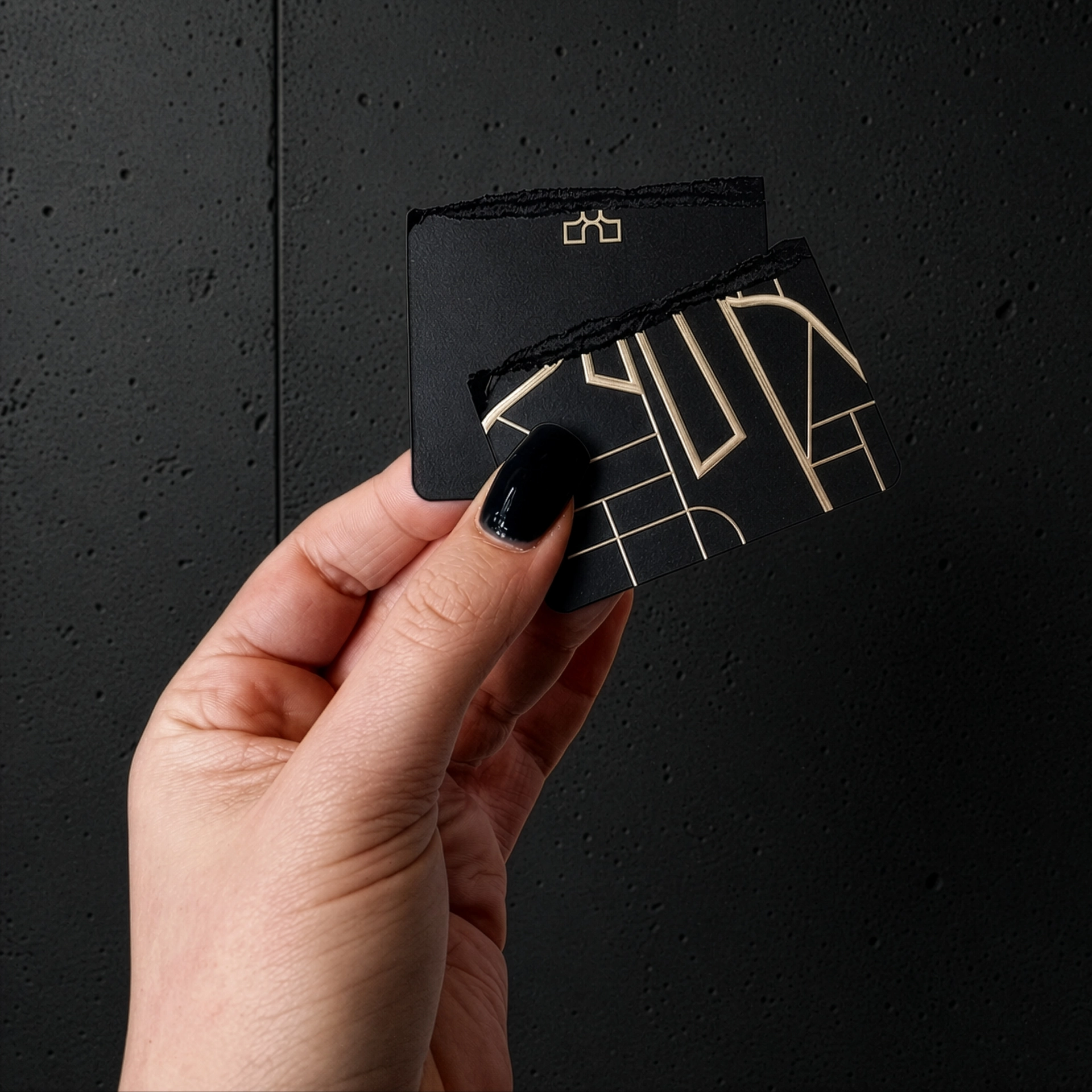
A flat print cannot fully deceive the eye. Pure luxury appears when a micro-relief arises on the background. Three-dimensional gilding consists in placing foil precisely on the paper under enormous pressure.
Raised golden lines catch even the faintest rays (the glow of a candle, the light from a fireplace). As the angle of view changes, 3D gilding lives a life of its own: it passes from a coppery bronze to a white flash. The play of micro-shadows means the same graphic looks different at each hour of the evening.
Haptic grounding in a relationship
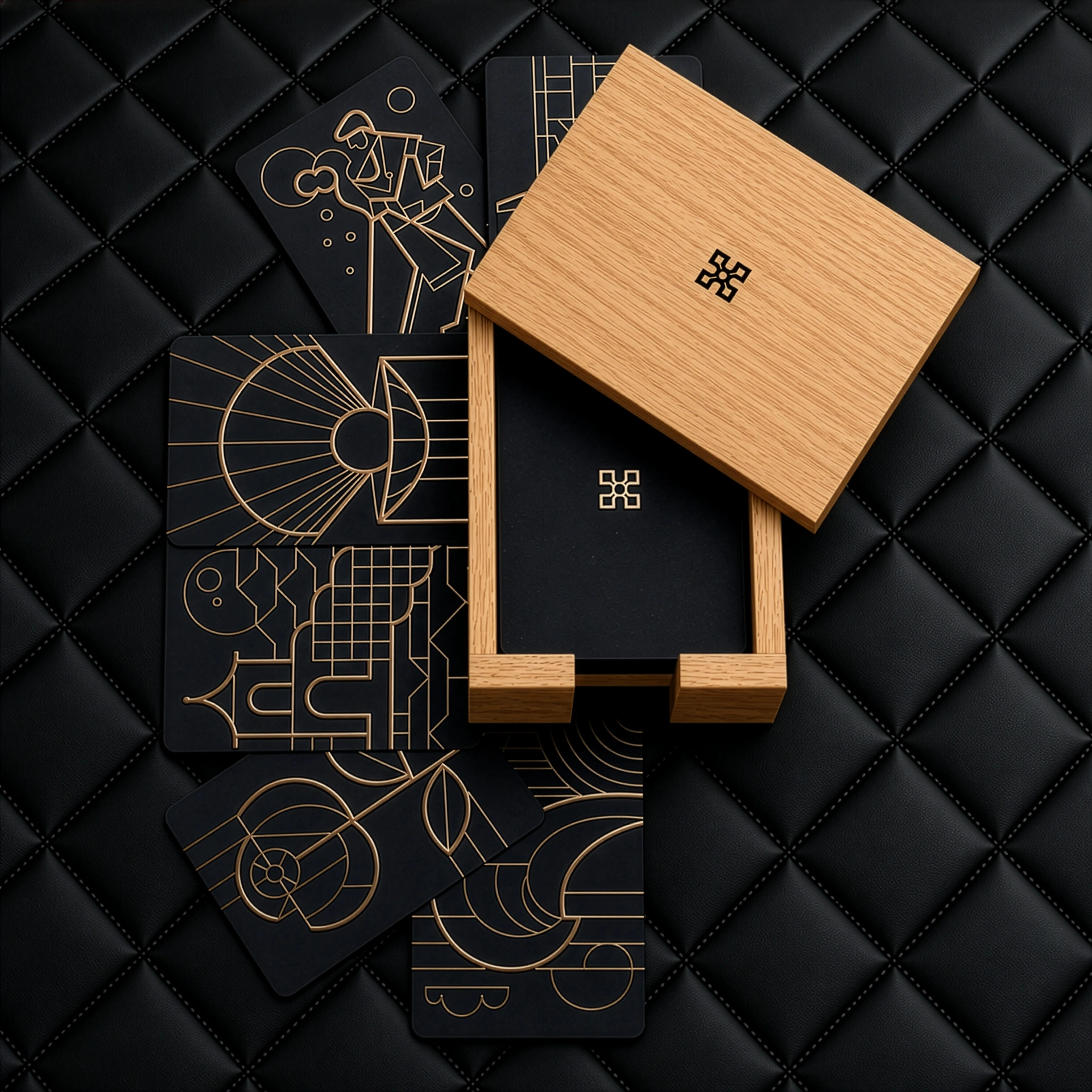
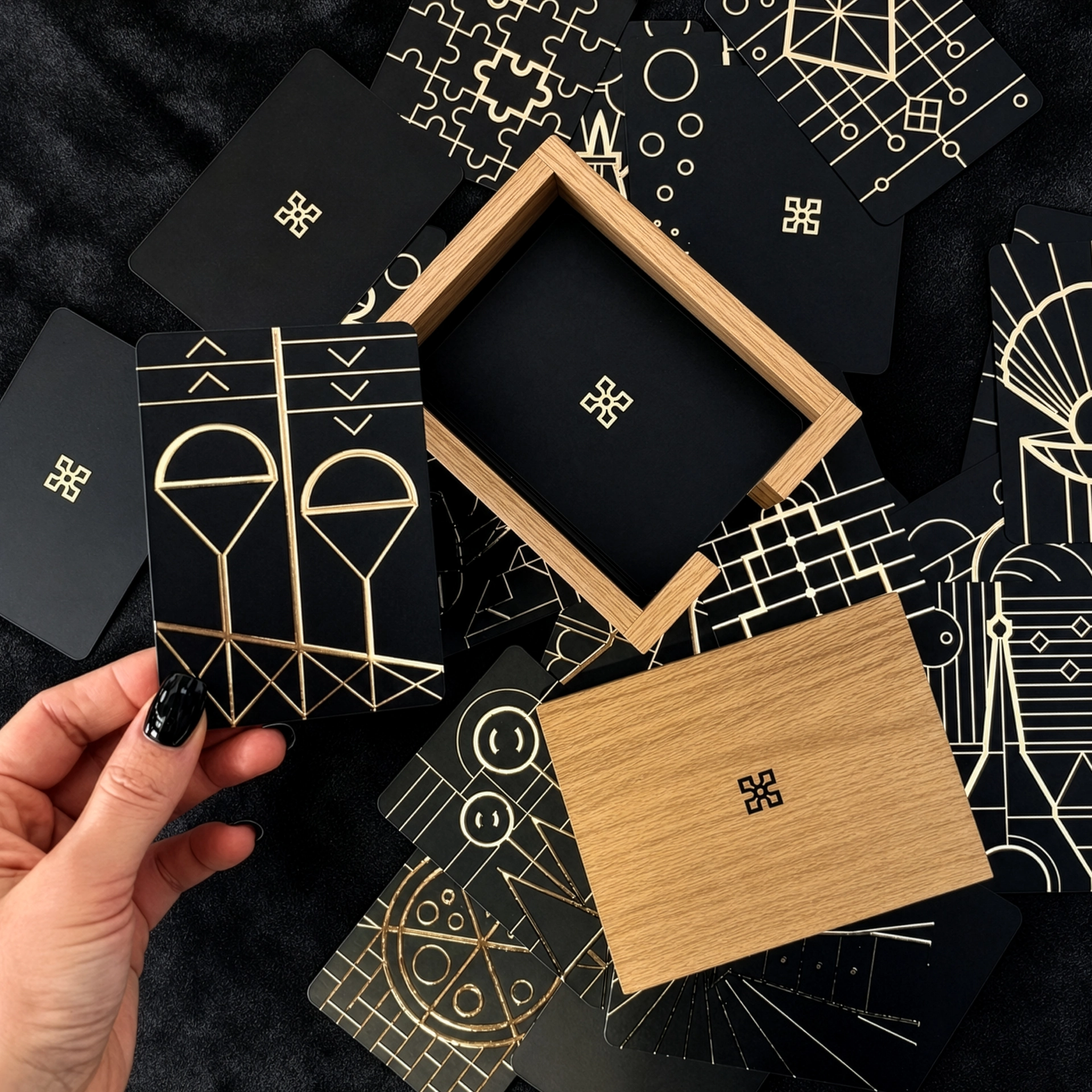
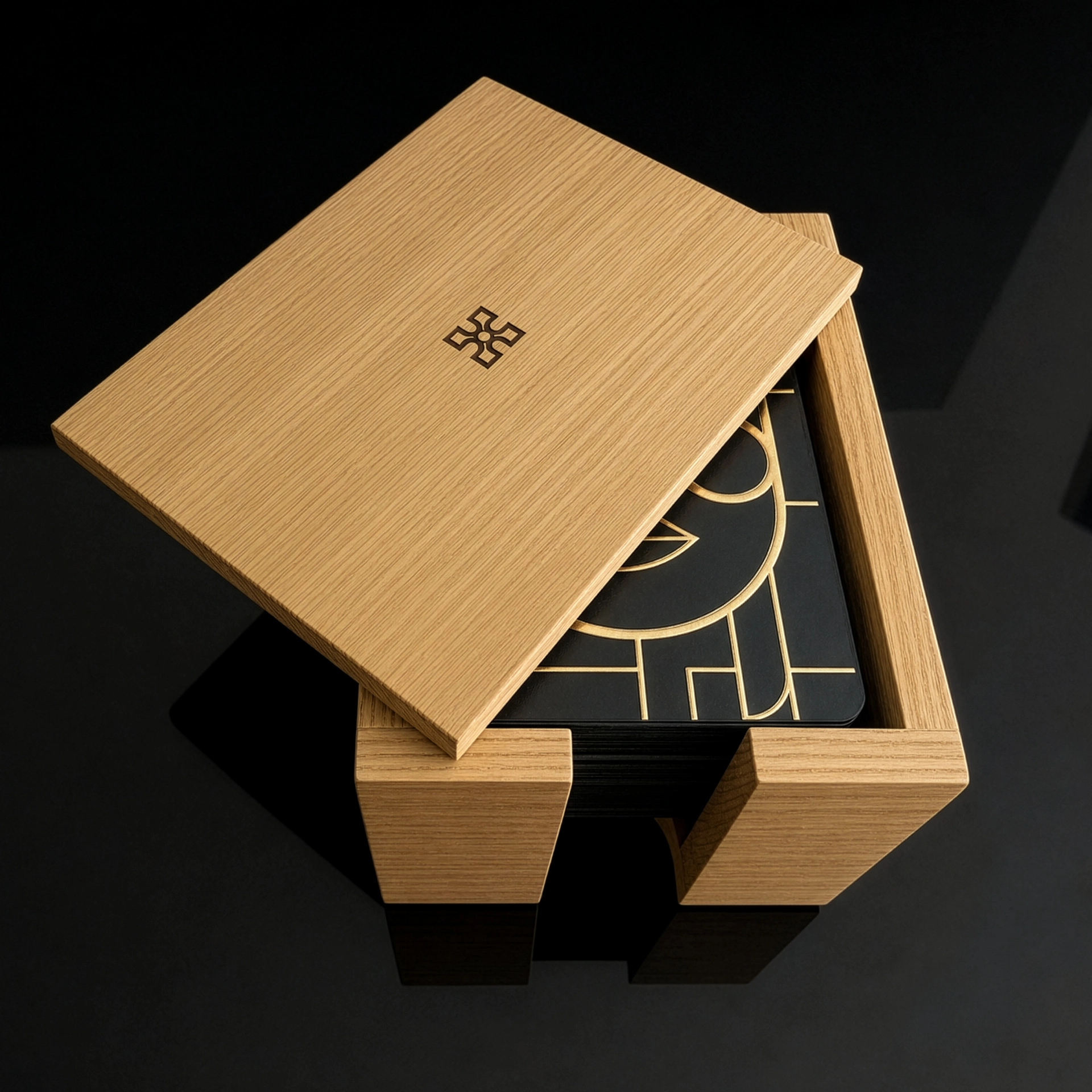
Applying these mechanisms became the foundation of the sets from the Odoardo Alibi™ brand. Rejecting the aesthetic of mass products, the raised gilding was applied directly onto black, solid-dyed paper. When you draw a card from the box and move your fingertips over the gilding, the movement slows of itself. The physical resistance holds the hand a moment longer than smooth print would.
The sensory process prepares both partners to face the 50 deep questions for your partner. The weight of the card in the hand slows the conversation by itself. Resting the graphics on abstract forms recalls the meaning of silence and image in communication. All of this stimulates active listening in a relationship. We also write about the role of touch in perceiving an object in the piece Physical contact with wood in the age of screens.
An answer to digital overstimulation
The fascinating relation between technology and human needs is put by the creator of the Odoardo™ ecosystem:
“The more efficiently we optimize our lives through virtual interfaces and intelligent algorithms, the more strongly our mind needs the physical resistance of matter. Luxury today means objects we can take in hand and feel the weight, texture and structure of. That gives us the certainty that what we are experiencing is real.”
Designing a domestic space in the spirit of quiet luxury should be a priority. If you fill your surroundings with works from Odoardo Art™ and introduce a steady digital detox before sleep, you will create a coherent ecosystem for rituals for couples. Odoardo Soul™ works in the same way, described in the piece The memory of an object. In such a quietened environment, the touch of raised gold on Odoardo Alibi™ cards becomes the key to the most important conversations.
Why we design for the hand and not only for the eye, we explain in the manifesto.
 Odoardo Soul™
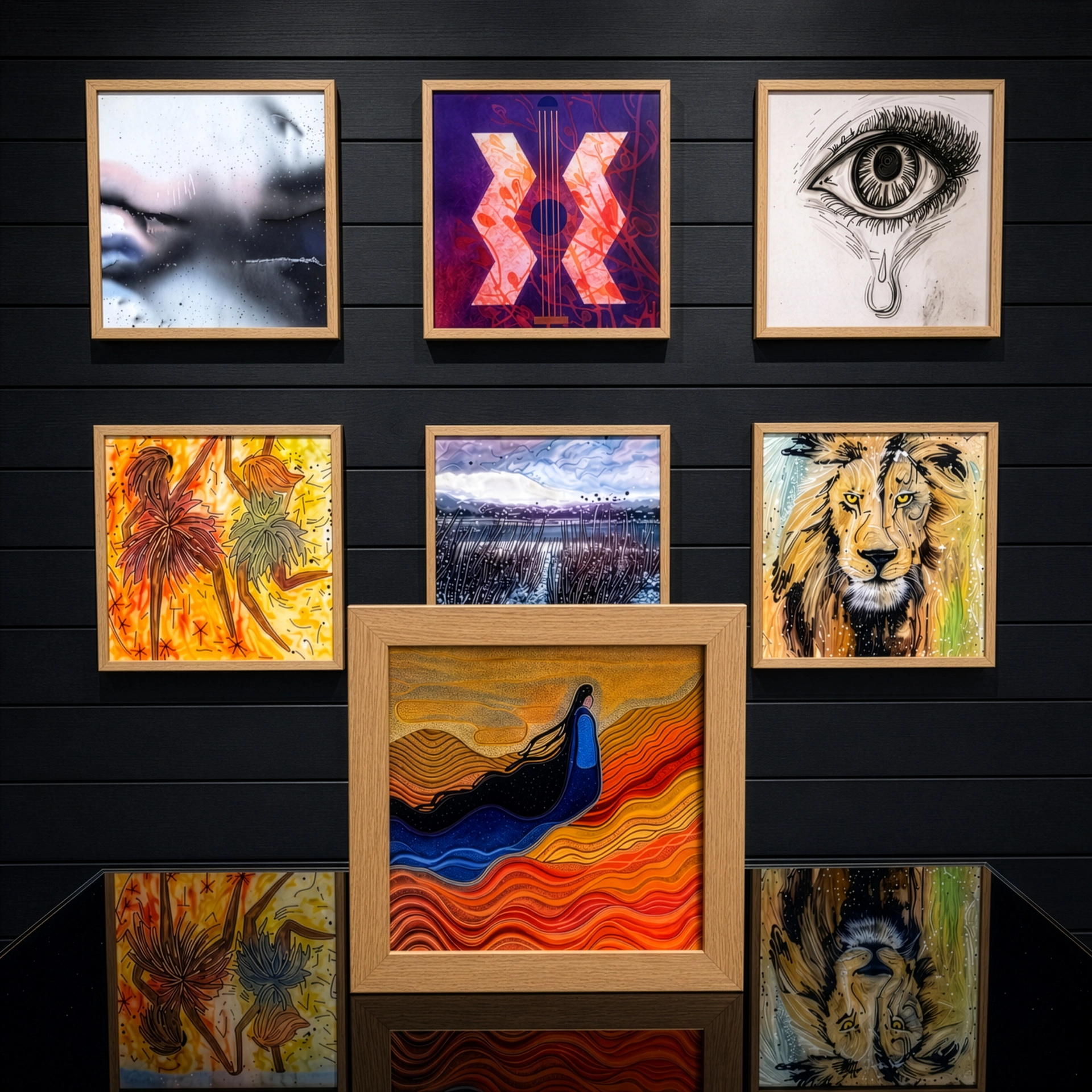 Odoardo Art™
 Odoardo Lens™
 Odoardo Space™